Tuesday, January 31, 2017

Recommendations: Wordsworth Quote

“For a multitude of causes, unknown to former times, are now acting with a combined force to blunt the discriminating forces of the mind, and, unfitting it for all voluntary exertion, to reduce it to a state of almost savage torpor.”

This passage is from Wordsworth’s “Preface to the Lyrical Ballads.” Though of course reading one quote isn’t anything like reading the whole book, there is value in excerpting. It is important to focus on texts and share them with one another.
This quotation was chosen because it was both important in the past, and it also befits the present. These sentences from great thinkers in the past remind us that our daily situations and musings are small participations in a great tradition.
This quotation is simple enough. Wordsworth wrote it as he prefaced a book of lyrical ballads. Ballads were not the elegant, high-society poems that were accepted at that time—they were traditionally poetry of commoners. The publication of this work shifted the focus of poetry to the common people. Wordsworth not only adopted their style, but he also made them the subject of his poetry. In his introduction to these poems, he claims that his culture was over-interested in unimportant events, that removal from nature through urbanization had overstimulated the minds of people. The poems, he hoped, would return them to that, train them once again to think, be interested, and be still. 
The quotation could be read as an accurate statement about our culture. This “savage torpor,” which the quote claims is “blunt[ing] the discriminating forces of the mind,” is as much an issue now as it was in 1800, though the “forces unknown to former times” are now of a different kind. One place I see this in our culture is in overstimulation by excessive intake of media. Culture encourages our minds to become “[unfit] for all voluntary exertion,” and it is for this reason that the reading is so important. Reading brings participation in past traditions and communion with scholars from other times. It also challenges thoughts and ways of thinking. When we choose to invest in the elite opportunity to read important texts, we mirror Wordsworth’s return to nature. We return to knowledge, we sharpen our minds, and we resist the torpor that Wordsworth warns us of. 

Sunday, January 29, 2017

Messay: White Paper Cuts

This is a short nonfiction story I wrote for my Nonfiction Workshop class this semester. I hope it makes you laugh. At me.

The Nerd Wound
         All athletic people are alike; each unathletic person is unathletic in their own way. I have never been athletic, but I have never really cared. I grew up running around the textbook publishing company my grandfather started, sneaking donuts from board meetings and accepting quarters from employees for punching the button for them in the elevator. I was in third grade when my parents sold the company, and by then I was running around the classical school they’d started, where I read the Iliad in fifth grade and wrote nine thesis papers before I graduated. College came next; I chose a small liberal arts university in Alabama, where I ran around rereading all the classical texts in the school’s honors program. I hadn’t realized the program was a big deal until I arrived. It wasn’t actually that big of a deal, I knew, but it had my favorite books, a place to discuss them, and people who liked discussing them too.
          I was indeed unathletic in my own nerdy way—classically trained, and content with my prowess fully in the classroom and not on the court. I have never been athletic, nor have I been seriously injured, and the two are, of course, correlated. Growing up, my friends would sprain their ankles or break their collar bones or lose a limb, whatever. I wouldn’t. So when I got out of the shower one afternoon, home for Christmas break from my sophomore year of college, I was startled to see blood all over my towel and arm. I traced it back to the side of my hand, which was bothered, apparently, and had decided to throw a fit.
        Though I saw the blood, I didn’t feel it. It was all up and down my right pinky, sliding to my wrist, dripping onto the white tile floor. I pride myself on my stoicism, so I didn’t scream and didn’t faint and grabbed a tissue and wrapped my finger in it. By the time I had put clothes on, the initial Kleenex was soaked through. I had only seen this much blood in movies—the amount that happens when that one character gets shot and bleeds all over their green uniform, and someone presses a white cloth to the wound (always white, to accentuate the blood), and by that time, the poor soldier dies looking like a christmas tree, the white of the bandage replaced with a vibrant red. The doctor gets there too late to know what to do, so he does nothing, and then the soldier never makes it where he was trying to go.
        I was not on a battlefield, though. I was not in a movie. I was in my childhood bathroom: light green wallpaper with butterflies, two mirrored walls facing each other, white floor and white sink and white towels. But according to the movies, they wouldn’t be white for long. So I tossed the juiced tissue into the trash, held my finger over the porcelain sink, and watched blood drop and drop and drop into the sink. I looked at the opening on the side of my finger. This was not what fingers are supposed to do. I didn’t know much about anatomy, but I knew an inordinate amount of blood when I saw it. Something was very wrong.
This bleeding went on for the week before Christmas and continued the week after. Every day, my finger would bleed for about ten minutes. I would stand at a downstairs sink and stare at the soup stain on the kitchen tablecloth or the dog bed in the corner covered in small white hairs. I would redden a dozen tissues if I tried to leave my station. The wound—I always used this word, because it might be the only time in my life I’d get to—was about the size of the end of a pencil. It didn’t look much different from a blister or a callus, or a cross between the two. It was nondescript—I didn’t notice it except for 10 minutes of the day—and it was threatening to ruin everything. This is not what fingers are supposed to do.
          This routine was fine with me. If I was going to bleed out, there wasn’t much I could do. But my parents were concerned. Their concern was fine with me, but its manifestation made me concerned: I could not go to the doctor. if I took this to the doctor, and it became a big deal, then I might not be able to get on my flight. It was the week after Christmas, and my flight took off in three days. And my flight was my wages, my payment for the job whose work had given me this bloody finger in the first place.
Pinky fingers don’t matter. They’re at the end of the list, not even good for delivering insults or holding love promises. Being on the end means that they’re on the edge, the closest finger to the rest of the world. And until I had an impact-activated blood fountain attached to mine, I never realized how often pinkies run into things. Doorframes, tables, any hard surface. But until this strange wound surfaced only one surface mattered—the page.
I write. I write for my sanity and for my GPA and to keep the postal service in business, and most of it begins on clean, white paper. I have always been a good student, and I hold my pencil exactly how Miss James taught me in Kindergarten and Mrs. VandeBrake re-taught me in first grade. Still. But still, apparently I write too much or too hard or have pinky fingers that weren’t made for such stressful working conditions—my poor little finger just gave out. I had hurt my pinky from writing too much. And I had written too much for all my days and days spent doing homework for the honors program, the program that was going to take me to Italy.
All thirty-seven of us had been waiting for months. Since we got our letters in March, letters that said we, the forty of us, could have the classrooms with coded doors and could register first for classes—ever since that day we had put Italy on the back burner and left the stove on red. The deal was that the program would fly all of us to Italy after our first three semesters. After the first one started, we didn’t know if we’d make it that far. One semester in, almost all of us dropped out. The second semester over, two of us actually did. The third came and went, and we lost one more with it, but thirty-seven of us had reminded each other of Italy enough times during late-night study sessions and failed papers and shelves of reading that thirty-seven of us had made it. And now I was three days away from flying to meet my friends in Atlanta, and my pinky was in my way.
        I wanted to ignore it, in case it was cancer or something that required a four-day treatment, but my mom made me go to the dermatologist. My dilemma was not the P.A. who looked young enough to still be in undergrad—she was competent and seemed nice enough. My dilemma was my flight, one day later, which would take me to Italy. I had earned that flight, and I was not going to miss it for some damaged vein or tumor or whatever was going on with my finger. I still didn’t know. I just knew that in three days I would be in Rome, even if I had to bust out of this office and a three-day treatment, even if they had to amputate my pinky to get me on the plane in time.
Turns out, all she had to do was laser it and burn it and stitch it and I was fine. Just a long sniff of burning flesh, just a small white bandage, and just one stitch left in my finger to take out once I got there. What the heck.
I didn’t care. I didn’t have cancer. I wasn’t going to be kept from Italy by an injury to the most insignificant part of my body. Three days later I was on the plane. A few more days passed and I took a deep breath and snipped a stitch, alone up in that hotel bathroom in Rome.
I knew athletes got hurt a lot. They walk into the cafeteria with ice wrapped to their arm or leg and the blase attitude of having earned their pain. Even their limping looks like a saunter with the matching backpack a punctuation on their forms. I, on the other hand, looked like a Victorian wash-up, with my pinky extended, waiting for a teacup as imminent as Godot.  I looked at my pinky a few weeks after I got back. My hand had done its job, gotten all my papers written, but even then my pinky finger had tried to make a mess of it. Right where my skin dragged the page was a blood vessel, and after enough writing it burst like a broken fire hydrant. The thing that got me to Italy almost kept me from it. Nerds get wounds, too.
I don’t mean emotional wounds. At all. The story of my pinky finger does not matter to me or to anyone else. Nerds get actual, literal wounds. And as it turned out, the nice P.A. had been a little too nice, and I had to go back to get it fixed another time, and she still didn’t fix it, and the third time I had to go to the real doctor. The last time, when the older guy did it, my finger looked like a zombie had taken a bite out of it—the hole was deeper than a pea and as black as charred squash. After a few weeks it turned white again, and I ignored it until last week, when I hit it on something, looked down, and caught my breath. But then I let it go, because I didn’t have Italy to get to, just class.

Wednesday, January 25, 2017

Recommendations: "First Impressions" by Charlie Lovett


I read a book recently called First Impressions. I don’t remember where I initially heard of it, but I was drawn to it because the author’s name is so similar to mine. When I read the blurb on the back—a re-engagement with Jane Austen’s writings featuring love, mystery, and bibliophiles—I was sold.

I got it for my birthday in August and read it in December. It was a quick read, only a few hundred pages, and it only took me a few weeks (that’s fast, for me!). Each chapter focused either on Jane Austen or on a young, twenty-first century woman named Sophie, who lives in  England and works in an antiquarian bookshop. In the sections about Jane Austen, Lovett imagines a mentoring relationship between Jane Austen and a kindly older man. The author did a good job of melding the two different times in history, and the story that connected them was inventive, interesting, and unfolded over the course of the novel. The novel exhibited a love for the written word, which I always appreciate.


The evil character was generally well-developed, although I found him a little weak at times, and Sophie, though usually interesting and believable, was sometimes a bit empty or boring. I wonder, though, if that’s just realistic. One scene at the end of the novel I found to be unrealistic—picture the evil character setting a fire and delivering a maniacal evil laugh, to give you the vibes without giving away too much—and I didn’t buy it. But at that point I was invested enough, and I was willing to let Lovett have that one. When I made my “good/nah” list to help write this review, let’s just say that the positives outweighed the negatives by at least double. Lovett gave the reader varying and likable characters, intriguing action, and a lovely setting; I’d recommend this as a fun read that’s light without being empty, and fun without being stupid. Check it out if that sounds like something you'd like!

all da luv,
Charlie

Tuesday, January 24, 2017

Fashion: Vogue Reflections (Dec. '16)

Here's some thoughts as I enjoyed Vogue's December 2016 issue. Think of it as my zine of the issue.

1. Dad, Interrupted. 102-6. by Jeanne Darst.
I don't know who Jeanne Darst is. I haven't heard of her or read her book, which she writes about in this article. I hesitate to "review" her article because it would be unnecessary; I would say something like "Darst writes with concision, wit, feeling, and success." That tells you nothing—if she couldn't do that, she wouldn't be published in Vogue. Instead, I'll tell you what I heard in it. I heard the difficulty of family, not in the cliche way but in the way that everyone who's reading hears something that resonates with them. I heard a recognition of the all-too-regular failing of parents and children to grow into adult life together, though her situation was colored by a more identifiable issue—the publishing of a book she wrote about her father. Finally, I heard a woman who had used the written word to write about something that she had no other way to say—"maybe unconsciously I did know that a book was the only way to say these things without being interrupted"—but that writing had left her with a second situation which she could get out of no other way but by writing yet again, this time in the pages of Vogue. She opened and closed the article by speaking about Christmas, wishing that her holiday would include her father and their relationship the way it had been before the book. The irony was all too strong that, though the article was a sure means of expression—one published in Vogue, no less—the interaction with her father was uncertain, and the redundancy of the issue of person vs. publication comes as a warning to me as I seek publication.

2. The X Factor
Xiamena Caminos (read who & what here) is a visionary. People like her, who share her vision and understanding, are the future of contemporary art. I say this not because I know anything about contemporary art, but because she convinced me that I could engage with and access contemporary art.

3. Crashing the Party
I'm beginning to wonder if this month's Vogue was written for me—this article was about a man who wanted to be a writer, decided to get a job rather than trying to make money off of fiction, and ended up working for people who organized ritzy charity balls of NYC's high society.
This man, Adam Haslett, is looking back to write this piece—the article fills this month's "Nostalgia" section—but what I find interesting is that it doesn't say what he's doing now. He graduated from college with a degree in Philosophy, worked in NYC for a while, the had to get away from it so he went to Scotland, where he lived for only two months, and the story ends.
And I love that, because I think about this so often: first job. How important is my first job out of college? How similar will it be to what I do for the following ten, twenty, thirty years? Do I want to make money or work in education or gosh I don't even know. But thanks to this guy, I'm reminded that I can just do something for a little while, something crazy, something fun, something kind of weird, and look back on it later with detachment and appreciation. And that's freeing: I don't have to change my life with my first job. I don't have to change my life, I just have to live it.

4. Oliver's Twist
If Vogue is seeking to inform me of new things and make me care immensely about them, at least for the amount of time the article continues to ring in my mind before I go on to the next one, then they are absolutely succeeding at their job. (Brb, telling Vogue that they have my approval. #congrats) This article was about Oliver Theyskens, who has been designing for Theory for the last five years but just recently released a line under his own name for the first time since 2002. I don't have anything deep to say except that I love luxury fashion and I like this guy. I just looked through the 25-look collection and it amazed me (the nicer way of saying it made me angry because it was so good). Check it out on that second link!

Monday, January 23, 2017

Recommendations: Donut Shops in Birmingham


Everyone who knows me knows that I love donuts. It's one of those personal characterizations whose distribution has outpaced the original sentiment, so people tend to think I love donuts much more than I actually do. Yes, I appreciate donuts more than most people. Yes, I eat a donut in every city I visit (see: Donuts of the World). But no, I don't eat donuts every day (as if!), or even every week. I don't actually eat donuts that much, I just appreciate their existence, and I love to share them with others. 

Today's post is going to review my top two donut shops in the Ham. The list is, of course, arbitrary, but I'll tell you why I've listed them this way.

1. YoYo Donuts, Etc.
This shop is nestled in the corner of the ugliest strip mall in cute SoHo, and its location (squeezed next to a mattress store and a food store, near an eyeglass shop and a Subway) epitomizes the vibes you'll get from this funny little shop. The inside is 1/2 low-budget (read: perfect) donut shop vibes, 1/2 empty loft and strange spacing. The first time I went in was before the Harry Potter redecoration, which has since been taken away. I had tried to visit in February when they were closed (it was Sunday), so after much anticipation, I got to try it in June, the next time I was in the Ham. The donuts are delicious and huge and so fun. The owner is sweet and enthusiastic, and she served us our donuts and helped us pick them out.
My three favorite choices here? Cinnamon Sugar Cake, Powdered Sugar Cake, and Chocolate Sprinkles (yeast, not cake). Best best best.

2. Heavenly Donuts
If you hear about donuts in Birmingham, this is the place you will hear about. It's been in books I've read about donuts, it's the first thing that comes up on Google, and it's in an area easily accessibly by family-oriented neighborhoods. They have a special on Friday and Saturday night—from 11pm to midnight, one dozen donuts is $3. Their Chips Ahoy donut changed my life, but they're all good. Red Velvet, Apple Crisp, and Sour Cream are a few more favorites.

Thursday, January 5, 2017

Baking: Cake Towers

Here are two more cake videos. Hooray!

I made this first cake when I got new cake tools for Christmas. I had about two hours of footage, but I trimmed it down to 41 seconds for you (#selfcontrol). It's probably the best cake I've ever made; especially the exterior. The inside is buttermilk cake, which I've never even heard of, and it tasted incredible. The recipe (here!) is from Vanilla Bean Blog. I made honey-cinnamon frosting, and it was too sweet, so it ruined the cake. But the cake itself and the outside were fun.

https://vimeo.com/196974275


I made this second cake for my roommate's birthday. I invented the frosting recipe, which was the first recipe I'd ever made up completely on my own! The cupcakes are for allergy friends, and we bought them from Gigi's.

https://vimeo.com/196920823


Saturday, December 31, 2016

Recommendations: Christmas Gifts

Hey fam!

Here's a mood-board what-I'm-feeling-this-season list of some fun lil things I've been keepin' an  eye on recently. Which is the blogger-trying-to-not-be-narcissistic way of saying this is a list of what I want for Christmas.


That's it. Not super exciting post today, but I liked the experience of doodling the list. It makes me wish I were better at doodling. 

Messay: Business Fashion

I found this quote in an interview in InStyle (December '16) with Donatella Versace:


"What are some ways a woman can dress today to look powerful that are different from the conventional power suit?"
"The old idea was really just about copying the wardrobe of men. The power suit was the female version of men's tailoring, and if you think about it, because it was a copy, it still suggested that women were not equal to men. That will never be the case again. The backbone of [my] fall collection is powerful tailoring. I don't want to call it "masculine" tailoring anymore. It's not masculine; it's for women on their own terms."


I loved this when I discovered it because it expresses so well my thoughts on women in business. This summer at my internship, I wore whatever I wanted to. Though my mom made me shop for grown-up clothes before I headed to Dallas (all of which I returned once I got there), and though my aunt said I wore "ballerina dresses," I continued to wear whatever I wanted. Here was my (audacious? or stupid) logic: Because I was the intern, getting me in trouble for what I was wearing would only hurt whomever scolded me—if they fired me, they wouldn't have anyone to do the tiny tasks for them. So I staunchly wore what I wanted, confident that my value was in the work I was doing rather than the clothes I was wearing.

This is an unusual attitude in the corporate world, though I find that this flagrancy of self-expression is common in other places in America's job market. This attitude was given its most fulfilling culmination in a comment from a male coworker one day, a comment that gives me hope in the flexibility and kindness businessmen to funky businesswomen.

I was in the break room, refilling coffee or eating lunch. I had never seen or talked to him, but I hear:
"Canvas roll-top sneakers and an emerald crushed velvet dress. Thank you."

What.
Yes.

He proceeded to tell me that he appreciated that I wore whatever I wanted. He said that women had so much more freedom than men in wardrobe choices, and he was happy to finally see someone taking advantage of it.

I love this man.
I have no clue who he is, but I love him for being aware, for the compliment, for telling me about a paisley shirt he wore once and got an inordinate number of comments on, for being conversant about gender roles and stereotypes in the business world today.

So thanks and praise to you, random man. And thanks to you, Versace, for saying in one answer what I thought about for a whole month.

Long live tulle skirts and combat boots, or whatever is "wrong" for business situations,
May it be deemed "right" before too long,
Charlie

Messay: Being Alone


When I was at Walden, I read a quote from Thoreau and thought, “Yes. Exactly. Yes.” So I decided it was my quote for the day, took a picture, and went out to the pond. Here it is:

"I find it wholesome to be alone the greater part of the time. To be in company, even with the best, is soon wearisome and dissipating. I love to be alone. I never found the companion that was so companionable as solitude."

That paragraph resonates with me. I love to be alone, and go places alone, and I consider the ability to be alone a strength. 

But I overcompensate. For example: I picked that as my quotation for the day I visited Walden, but I was visiting with my little sister. I enjoyed the experience more because I had someone to fangirl with. Yet I still picked that (dare I say) self-righteous quote from Thoreau as my quote to think on.

Recently, I’ve realized that I over-glorify solitude. Although always needing someone is a weakness, obsessing over independence can also be done to a fault. One of my mom-friends who I’ve worked for at kamp was one of the first people I heard this from. She told me that I wasn’t good at needing people, and it was something I needed to learn. I’ve also seen this in the point I’m at in college: Freshman year I had no friends, sophomore year I was just excited to have any friends, but junior year, I’ve begun to feel the strains of overcommitting. I am naturally inclined to go wide and shallow—to have many friendships that don’t go deep. I was feeling the exhaustion of too many relationships without depth.

My love of aloneness began when I got to college. I would get in my car and go to dinner or sit at a coffee shop just because I could, just to recharge from being tired of being around people. I realized after a while that this was not something everyone could do—many people needed someone with them all the time. I embraced it as a kind of superpower, reveling in my alone adventures all around the Ham. As I adventured, the city became my own: I found places where my soul could rest. 

So when I read that quote from Thoreau—“I find it wholesome to be alone the greater part of the time”—I immediately empathized with it, but I also felt a bit of bitterness in it, a bit of a lesson that I still have to learn. I’m not good at going to people when I actually do need them. For the first time in my life, I have someone I’m comfortable going to when I’m struggling. She’s my big in my sorority, and last November I was struggling with something so intensely and actually asked her to get coffee so we could talk about it. I knew that that was what I needed—just to talk about it—so that was what we did. 

But I’m still not good at going deep with people I love, I still don’t know what it means to have accountability, I’m still learning what it’s like to have friends pursue me as much as I pursue them. I think, then, that Thoreau’s quote represents an extreme that I don’t need to listen to. It’s easy for me to be alone, but I still need to learn to need people. 

To end this blog post in the typical way (or the Darling way, I'm not sure), here’s a thought provoking question (ha): 
Which side of the spectrum do you fall on—do you exercise aloneness not enough or too much?

all the love, 
charlie

Letters: Random Mail

I love letters. I think they're so important and such a good way to communicate. They're one of the ways I am able to express myself best. Here's a few letter's I've written. Enjoy them as a peek into my life, or as ideas for letters you need to write!


A thank-you note for the sweet friend who got me my summer internship:


A random note for a friend:


Notes I left all around Italy and Berlin:


and the one I was contacted about!

A note for a girl going on a mission trip, using ideas from this messay: 


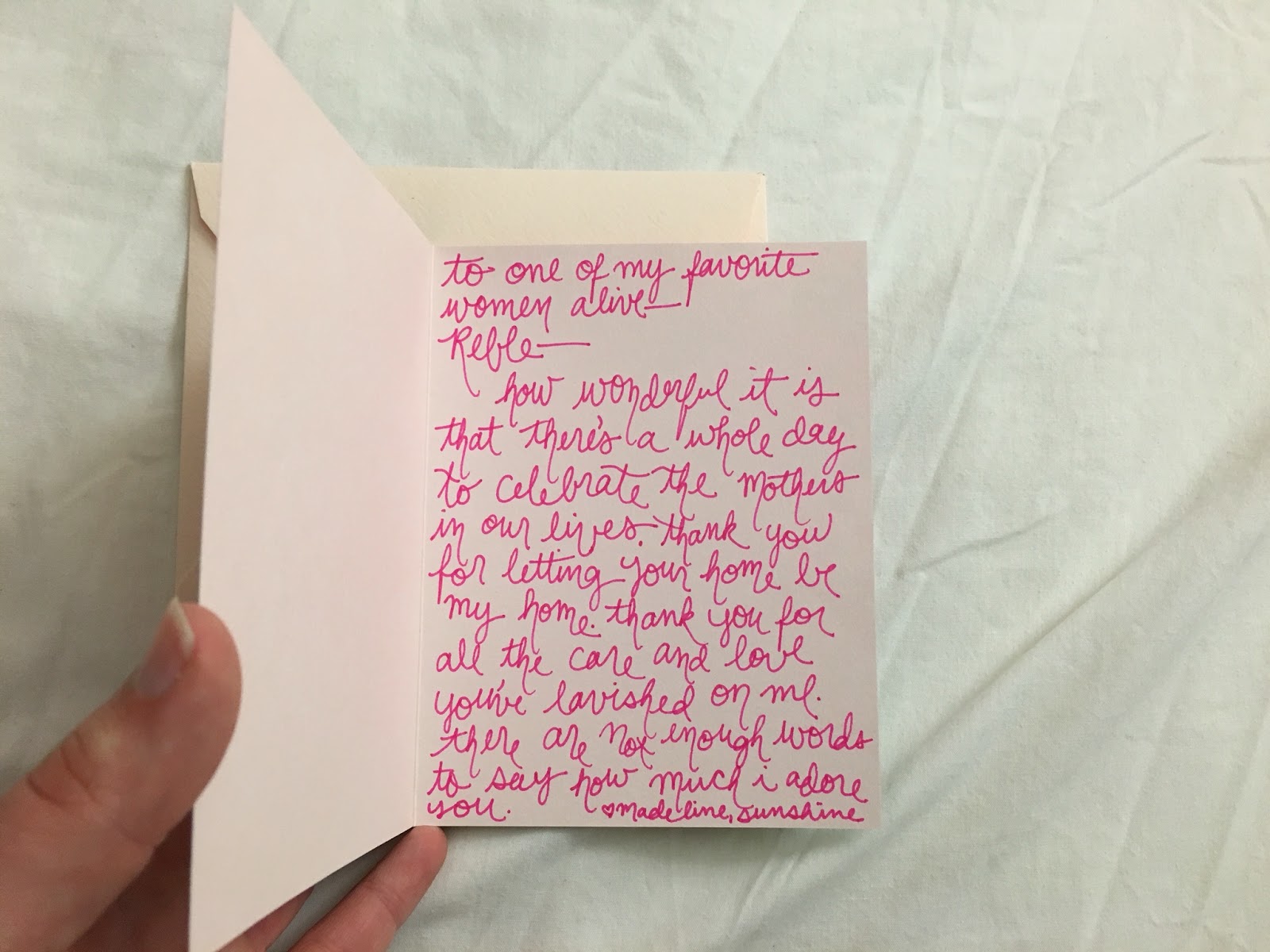
 My mother's day card selections:


And these letters to kamp kounselors, upon the beginning of my term as a kamp kounselor, which you've seen before here:


Hope you enjoyed a little snapshot into my mailbox!

Travel: Paris in a Weekend

Paris in 1 Weekend: Top Picks

Latin Quarter
  1. La Creperie. This my #1 favorite restaurant in the world. It’s in the Latin Quarter, which is where many universities are in the city. That's in the fifth arrondissement—an arrondissement is a district they divide the city into. I know how to use the word, but I don’t know how to say it. The whole city has 20, and they spiral out from the middle like a cinnamon roll. The first is near the Rue de Rivoli, which is where the Louvre and the Tuileries Gardens are!
    The address is 12 Rue Soufflot, 75005 Paris, France. **Don’t** go to “La Creperie Saint Germain,” or any other “La Creperie” in the whole city. This one is the one. And go hungry, because the best thing to do is to get a savory crepe for lunch, then a sweet one for dessert.


  1. Le Jardin du Luxembourg. This my favorite park in Paris. There are fountains, ponds, tennis courts, seating areas, but the best part is the kid park in the middle. You have to pay a Euro or two to get in, but then there’s this zipline thing at the back that is absolutely singular and completely fun. Because it’s a kid park, you’ll wait in line with all the kids, but if it’s winter it shouldn’t be too crowded. My sophomore year roommate did the ride this summer because I told her to. She said it was worth it.


By the Island (the two islands in the middle of the Seine River)
  1. Shakespeare & Company. This is the bookstore to visit in Paris. You will read and hear about it for the rest of your life. I know because I haven’t been yet . . . regrets. Just check out their Instagram and you will be converted: @shakespeareandcoparis
  2. Berthillion. This is often called the best ice cream in Paris. Technically it’s “glaciers,” but I don’t know how that’s different from ice cream. It’s a ten-minute walk from Shakespeare and Company, and you walk right by Notre Dame to get there.
  3. Notre Dame. Of course! It’s free and open every day from 8:00-6:45 (open till 7:15 on Saturday and Sunday). You can meet at the back of the cathedral behind the organ for a free guided tour at 2:30 on Monday, Tuesday, and Saturday or 2:00 on Wednesday, Thursday, and Friday. I haven’t done this, so I don’t know whether to recommend the tour or just walking through on your own. I don’t think it will make a huge difference either way. I'd guess that if you want to fully appreciate it and really know what you’re looking at, then do the tour, whereas if you want to have flexibility in your schedule, just go walk around. Notre Dame is beautiful, and you’ve heard of it and know you need to go, but please don’t miss Sainte Chapelle (see next!).
  4. Sainte Chapelle. This chapel is a two-minute walk from Notre Dame. It’s a beautiful church that most people miss, but it’s a shame because its stained glass is unbeatable. The main chapel is almost all windows, filtering down beautiful blue light, and the entrance has the most magical vaulted deep navy ceiling with stars painted on it. It’s either 8 or 10 euros to get in, but Notre Dame is free, so you can pretend it was 5 for each church and then it’s a steal.


Rue di Rivoli and the First Arrondissement
This area of Paris has so many things to do. I think I’d recommend spending Saturday here; starting with the Louvre, early lunching at Angelina’s, a walk through the Tuileries Gardens with stops at the carousel and Musee de l’Orangerie, and walking across the Seine to finish at Musee d’Orsay.
  1. Angelina’s. This is first on this section’s list for a reason: Even though it’s not a big museum, it is an absolute necessity that you go here. People claim that this is the best hot chocolate in Paris, if not in the world. They’re absolutely right; European hot chocolate tastes like melted chocolate bars, not milk diluted with chocolate flavor. Angelina's also has lots of classic French pastries. You can get both pastries and hot chocolate to-go. You could also go for tea, where you wait in line to be seated, and you get to pick your pastries and drinks and snacks from a little booklet. They’re super busy all afternoon, so either get it to-go after the Lourve or Musee D’Orsay, or go for sit-down tea before 12:00 or between 6:00-7:00 (they close at 7). Your choice just depends how you want to spend your time. There’s also a bookstore, Librairie Galignani, right next door, so if you have to wait for a table at Angelina’s, maybe duck in here to enjoy the time.
  2. Tuileries Gardens and the Carousel. This is one of the biggest gardens in Paris. It’s not my favorite to spend time in as much as Luxembourg, but its location is central. The best part is a carousel that only costs like 3 euros. It’s magical and fun, whether you watch or ride. But, of course, I ride. If you’re leaving Angelina’s, walk away from the Louvre and cross the Rue de Rivoli at the Rue de Castiglione, and you’ll find the carousel soon after entering the gardens. Taylor Swift has been there, here’s proof: https://twitter.com/taylorswift13/status/295578680812531713 
    As you walk through the gardens, toward the Seine away from Rue de Rivoli (after leaving the carousel), you’ll cross the Seine on a bridge (it’s sort of named Leopold Sedar Senghor, I think.). This bridge, when I was there summer 2015, was the new lock bridge—there had been a lock bridge, the government took it down, and this one became the new one. So you can buy a lock and lock it on the bridge and throw the key into the river and be all romantic and stuff. Or just take cool pictures.
  1. Musee d’Orsay. There are three museums in this area, and this is easily and by far my #1. The first time I went to Paris, I didn’t know the Louvre was closed on Tuesday so I didn’t end up getting to go, but this museum kept me from hardly noticing. I’ll get to the Louvre in a second, but first, wow. This museum is in an old train station, which in itself is crazy beautiful. The best part of the museum is the Impressionist works, which are all the way to the back and up the stairs. THEY HAVE 81 RENOIRS AND 86 MONETS. ABSURD. If I were you, I would mosy through one side on the way to the Impressionist section, then mosy back through the other side on the way back to the front. My only super important works that aren’t in the Impressionist section are a few Van Gogh paintings (Self-portrait! And Starry Night over the Rhone, not the starry night but extremely pretty anyway). Whistler’s Mother is another famous painting, but I’m sure the little free pamphlet will help you hit the public's high notes. I can’t emphasize enough that the Impressionist section is where to focus your time. This is the largest collection of Impressionist works anywhere in the world (ANYWHERE IN THE WORLD). I was just googling the works they have and my soul was moving they are so incredible. My favorite Impressionist is Alfred Sisely, but of course Degas and Monet and basically everyone else thrill me too. The hour you spend here will be one of the most significant and crazy hours of your life, at least in relation to art and magic and pleasure. Also, at the very back of the exhibit is a restaurant, and if you sneak into the restaurant (everyone does it, no one cares) you can get to a door that goes onto a balcony with an incredible view—it overlooks the Seine, the Tuileries Gardens, Rue de Rivoli, and, in the distance, Sacre Coeur. It is an incredible view, don’t miss it. Oh dear. This paragraph is getting way too long, so let me just suggest buying your ticket online ahead of time (super easy from their website) and going to Entrance C (rather than the main one); this will be much faster. I’m not sure where Entrance C is, but, now that I think about it, I think you can go in at the main entrance (where the long line will be) but don’t wait in the long line (go in a different door), and you’ll hop the ticket line to go through security and enter the museum almost line-free. If that all sounds too complicated, waiting in the line shouldn’t take longer than a half hour!


  1. Musee du Louvre. As they say, “you already know what it is.” This unbelievably vast, intensely famous museum is beautiful and magical and a little overwhelming. Honestly, none of the art here is really my favorite (a little dramatic, but you know what I mean.). After the Impressionists at d’Orsay, I don’t get quite as excited about anything else. There’s three ways I would suggest to do the Louvre. First, make sure you go in at the secret entrance (=no line. Here’s a really clear explanation; it’s #2 http://sightseekersdelight.com/guide-to-louvre-secret-entrances/). Grab a pamphlet, pick your top four or eight or however many things, and bounce from one to the other, appreciating everything you see on the walks in between. You can also do a guided tour; they cost an additional 9 or 12 euros, but they hit all the high notes and tell you about them on the way. These are offered at 11 and 2 every day, so make sure you’re inside with enough time to find the signs and get settled. My last tip is lame, but here it is: If you don’t go to the Louvre, you will be okay. You can visit the entrance—it’s connected to the Tuileries Gardens—look at the beautiful pyramids, take some pictures, and head over to de l’Orangerie or d’Orsay. I’m not saying you should do this, I’m just saying that you can. One last thing: don't go see the Mona Lisa. The only reason everyone goes to see the Mona Lisa is because everyone goes to see the Mona Lisa. It’s like a Kardashian, famous just because it’s famous. It is much smaller than you’d expect, and the crowd around it is insane. That being said, feel free to go see the Mona Lisa. I just want to make sure you know it’s generally underwhelming.


  1. Musee de l’Orangerie. This museum is in the Tuileries Gardens. It pretty much only has Monet’s water lilies, which are room-sized paintings. I’m not convinced it’s worth the visit or the 9 euros. I’d suggest google-imaging and trip advisor-ing it to see if you’re interested. I’m just mentioning it because it’s close, popular, and would be easy to hit while you’re in this part of town.
  2. Bagelstein. This is yummy and inexpensive, and if you need a good, cheap meal at any point in this CRAZY FUN day.


Champs Elysees and the Eighth Arrondissement
This part of town is near the First Arrondissement, only a short bop over from the Tuileries Gardens through the Place de la Concorde (just a plaza with a big thing in the middle).
  1. Champs Elysees. This is one of the most famous streets in the world. It’s full of shopping—H&M is my favorite—and the Arc de Triomphe is at the end.
  1. “Eh”: Arc de Triomphe is beautiful and famous, but all you can do is look at it and take pictures, just fyi. Also “eh,” Laduree is a crazy famous Parisian bakery, known especially for their macaroons, and the location here on the Champs Elysees I think is the flagship. I hate to be that person (do I?), but it is my professional opinion that it’s 70% hype. The macaroons are yummy, as are the other treats, and it’s probably fun to have tea here (after a two-hour wait), but I don’t find it any more delectable than any other place in Paris. Also, Laduree now has locations in every other major city, so you’ll have the opportunity to buy overpriced macaroons anywhere else in the world!


Montmartre
I feel the need to tell you about this part of town, so here’s this.
  1. I haven’t spent nearly as much time in this neighborhood as I would like. Trip Advisor calls it “a corner of Paris full of life and dynamism with charms that can’t be found anywhere else.” I have no good recommendations for this area as far as cute shops or food, but something tells me that a walk down the street or a quick search on travel blogs will give perfect recommendations.
  2. Sacre Coeur. Montmartre is north of the center of Paris, in the 18th arrondissement, and this church can be seen atop its hill from many places in the city. It’s huge and beautiful in its location way up on the hill, with free entrance. The view over the city is cool, and you may be able to go up in the dome, I’m not sure.


Also, Le Pain Quotidien is a great cafe. You can find locations throughout Paris, so it may be helpful to look up locations close to your destination for that day and grab lunch or dinner there. You’ll see satellite locations all over the world, so it’s fun to have gone in Paris!


The only other must-see is the Eiffel Tower, which I don’t have much to say about. I’ve never been up the elevator, so I can’t tell you much about that. There’s a big grassy area in front that you can hang out in. Maybe find a breakfast place nearby, or go at sunset and get dessert or dinner after.


I just googled Top Things to Do in Paris, and the first eleven on Google’s list I’ve listed here! And the next 10 or so were generally insignificant and would be hard to hit in one weekend. Sorry I haven’t listed more restaurants, but I’ve given you all the ones I’d definitely recommend. Trip Advisor is always my favorite place to find restaurants, because the reviews give you a good idea of what you’re getting yourself into. Trip Advisor also makes it easy to narrow options down by location, cost, or cuisine type.

For transportation, I’m always a fan of the subway, and in Paris it's just fine. You can always taxi, uber, or take the bus. I find the bus a little confusing, but it’s cheap, and usually people on the bus speak English and will help you get where you need to be (I say usually, I’ve only ridden it once, but people were helpful then). Once you get to an area, you’ll often be able to walk to the other attractions from that first one, so also feel free to subway or uber/taxi, whichever you’re more comfortable with. The best way to do this is to look up the directions to/from all your locations on google maps and screenshot them while you’re still at the hotel (aka while you still have wifi), which prevents you from using data for directions.

The Summer Shadow: Behind the Scenes

The past few months, I've been preparing for my summer project. Here's a sneak peek at a few quotations that I hoped to tack somewhe...